SwissCham Raclette and Fondue Dinner 2022


Watch a post event video of Indonesia SwissCham Raclette and Fondue Dinner


On 12 December 2022, SwissCham members and friends delights in Swiss dish fondue and raclette at #SwissChamID 2022 Annual Fondue & Raclette Dinner.

Our heartfelt thanks to all sponsors:

  • Main sponsor: Zurich Indonesia


  • Time International


  • Cotecna
  • Ferring Pharmaceuticals
  • HMM Attorneys at Law
  • KADIN Swiss Liechtenstein
  • Kokonut Global Exporisa
  • Sika Indonesia
  • Synexis Consulting
  • Tunas Tasik
  • Ylabs Inovasi Indonesia

and all partners,

  • Endress+Hauser
  • Gran Melia Jakarta
  • Mercedes-Benz
  • Nestlé Indonesia
  • Raffles Hotel Jakarta
  • Synexis Consulting

Thank you to all participants, see you at the next annual Raclette and Fondue dinner!


IMG_0999-min

SwissCham Donation for Earthquake Victims in Cianjur Channeled to the Indonesian Red Cross

Donation hand over to PMI


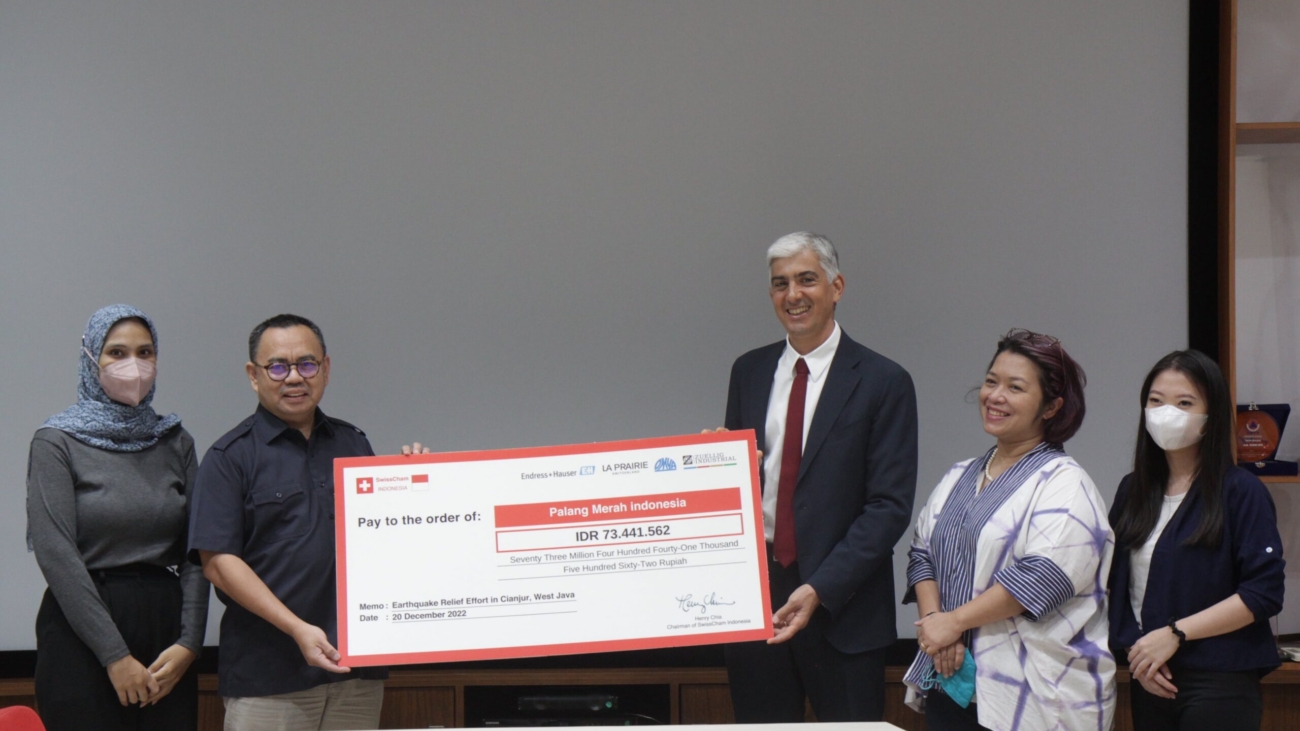
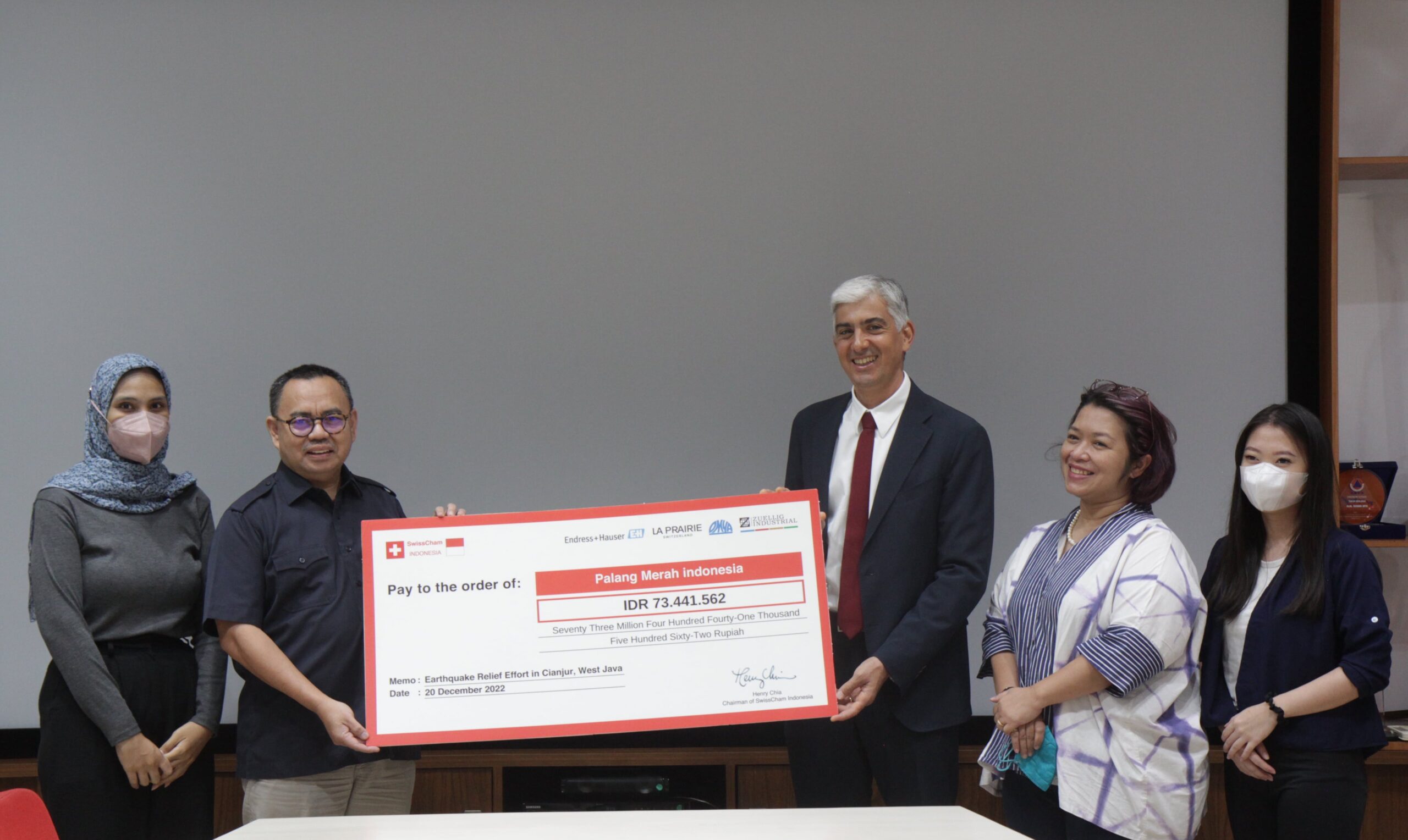
20 December, 2022 – Jakarta, Indonesia — Indonesia SwissCham has channeled donations to those impacted by earthquake and subsequent landslides in Cianjur, West Java, via the Indonesian Red Cross (Palang Merah Indonesia) to aid the emergency and recovery phases.

The Vice Chairman of Indonesia SwissCham, Mr. Khalid Ibrahim, together with the representative of the donor company, Frida Attila from Endress+Hauser Indonesia, handed over the donation funds to Mr. Sudirman Said, Secretary-General of the Indonesian Red Cross (PMI) on December 20, 2022, at the PMI Headquarters.

The donations are collected from the proceeds of SwissCham’s Raclette and Fondue Dinner 2022 and generous support from SwissCham member companies; Endress+Hauser, La Prairie, Omya Indonesia, and ZI-Techasia.

Mr. Sudirman Said offers his sincere thanks to all SwissCham members and partners who have contributed to this effort. Indonesia SwissCham also thanks all friends for the contribution. 

Why Organizations Shouldn’t Skip Background Checks on Their Prospective Employees

This publication is authored by and reflected the views and opinion of PT Integrity Indonesia. More information about PT Integrity Indonesia is available on www.integrity-indonesia.com

 

How do you know if the candidate you offered a position to is the right one? They may have shown you an appealing resume and diploma, but how can you be sure that they are who they say they are? Is the diploma authentic? Did they really perform well in the past?

It is essential to maintain a healthy dose of skepticism throughout the recruitment process and to reinforce that skepticism with background checks. Employees are invaluable assets because they are the face of the company to the outside world—to clients, partners, and consumers alike. One bad apple can cause adverse ripple effects on the organization, from lowering morale to undermining productivity and a decreased bottom line. The organization’s reputation, which took blood, sweat, tears, and probably a great deal of funds over the years to build can be undermined in an instant.

A study revealed that 43% of organizations that fell victim to occupational fraud did not run background checks on the perpetrators prior to hiring. 

Hence, organizations are urged to invest time, money, and effort to delve into candidates’ backgrounds. Background checks provide comprehensive, accurate, and essential information about prospective employees.

With comprehensive information at their disposal, organizations can make informed decisions. This can keep organizations from costly bad hires.


The evolving era: digital technology and the pandemic

Increased global connectivity enabled by evolving digital technology has led to a rise in the employment of remote employees in both permanent and temporary capacities.

The pandemic has catalyzed this phenomenon, turning it into a new norm. Large-scale social distancing has changed the way people do businessworking from home on a full-time, hybrid, or ad hoc basis.

On the one hand, the new norm presents remote employees and freelancers with a more significant role for organizations. It provides the organizations themselves with a range of benefits, such as access to a larger pool of talent, better employee retention, lower overhead costs, etc. On the other hand, it puts organizations at more risk.

Ride-hailing drivers, package and food delivery personnel, freelance writers, etc. are the organizations’ assets. If even one of them misbehaves with consumers, the reputation of the company is at stake.

Given this situation, background checks have become a growing necessity.

The costly risks

Various checks are carried out in the background screening process, which can be tailored to the needs of organizations depending on the industry and position level. Basic checks, such as identity verification, diploma verification,  and criminal checks, are a few that are generally carried out for all levels.

However, for positions that are strategic or C-level, organizations need to tailor comprehensive and in-depth background checks, which can include competency credential checks, bankruptcy checks, reference checks, in-depth media checks, Politically Exposed Person (PEP) checks, and even drug testing.

Basically, the greater the authority of a position, the deeper the background check that is required. The risks of lax background checks at the C-level are no joke.

In the case of Adam Rapoport, the former editor-in-chief of Bon Appetit magazine, an in-depth media check may have turned up racially insensitive posts on social media. These old posts came to light following the accusation of his preferential treatment toward certain employees on the Bon Appetit team.

Long story short, this toxicity sparked outrage among print and digital subscribers, as well as current and former employees of the magazine’s parent company, Conde Nast. Rapoport quit the magazine in 2020, as did other employees at all levels.

However, the damage was done. The magazine lost almost 10,000 print subscribers, its monthly subscription rate dropped by 300%, and the number of people who watched its videos each month dropped by 36%.


How background checks are carried out

Depending on the necessity, organizations may do background checks via their internal HR, in partnership with third parties, or both. Since it involves the gathering and processing of prospective employees’ personal data, background checks must comply with the applicable legal framework.

In particular, Indonesia’s Personal Data Protection Bill (PDP), which was enacted by the Indonesian Parliament on September 20, 2022, makes Indonesia the fifth Southeast Asian nation to establish a legal framework for personal data protection.

Some of the concepts regulated in the PDP law refer to the GDPR—a consent letter is one of the concepts. According to Article 24, organizations must obtain a consent letter from prospective employees before performing background checks.

In addition, data retention is also regulated by this law. Article 16 regarding the Processing of Personal Data Paragraph 2 (g) states that Personal Data must be destroyed and/or deleted after the retention period ends.

There is a saying that goes, “Those who do not cut corners will reap the benefits”. Conducting comprehensive, thorough, and compliant background checks can be a rewarding investment and can potentially prevent substantial losses.


This publication is authored by and reflected the views and opinion of PT Integrity Indonesia. More information about PT Integrity Indonesia is available on www.integrity-indonesia.com
POST-EVENT-B20-Sustainability-Awards-Ceremony-min_0

B20 Sustainability 4.0 Awards

B20 Sustainability 4.0 Awards

B20 Awards

The first edition of the “B20 Sustainability 4.0 Awards” is a joint European-Indonesian project and a side event of B20 Indonesia 2022. The Awards Program is organized by the Cham Swissber of Commerce and co-organized by Kadin and Eurocham, along with partner chambers Britcham, Ekonid, IBAI and IFCCI.

Applicants who are eligible to win represent stakeholders with major contributions in sustainable development in Indonesia. They demonstrate innovative existing or forecasted verifiable results and evidence in sustainability.


Goal

The B20 Sustainability Awards 4.0, a side-event of B20, celebrates businesses and individuals that embed sustainable practices in their strategies and processes by embracing the environment and societies in their agenda. SwissCham, in partnership with Kadin Indonesia and EuroCham along with partner chambers, namely Britcham, Ekonid, IBAI, and IFCCI, aims to bring awareness to environmental sustainability by identifying and recognizing high-impact projects of private sector businesses operating in Indonesia. The B20 Sustainability Awards 4.0 is also in partnership with Universitas Trisakti and Bappenas for the organization of the Awards program. In this debut year of the awards program, we focus on the topics Clean Water, Plastic Reduction and Recycling, while promoting the role of Indonesian women in the environment. Related ideas include “digital sustainability” and “carbon emission reduction” (under the Paris Accord) as additional aspects to consider for applicants.

The Award is designed for those who strive to make sustainability their business by highlighting a sustainability journey of continuous improvement in processes and results. Applicants who are eligible to win represent stakeholders with major contributions to sustainable development. They demonstrate innovative existing or forecasted verifiable results and evidence in sustainability. With decades of experience in sustainable businesses practice, the B20 Sustainability Awards 4.0 is keen to be a symbol of credibility and pride for companies. We welcome the applications from a wide range of businesses throughout Indonesia. The B20 Sustainability Awards 4.0 recognize and reward innovation in businesses and individuals that are seeking ways to be more sustainable and inclusive in their activities.


Objectives

To bring awareness and celebrate positive sustainable initiatives in Indonesia. This first edition of the Awards Program will happen just before the G20 summit, in order to leverage the potential impact of this initiative for larger purposes.


Journey

The Award Launch

Launching Event

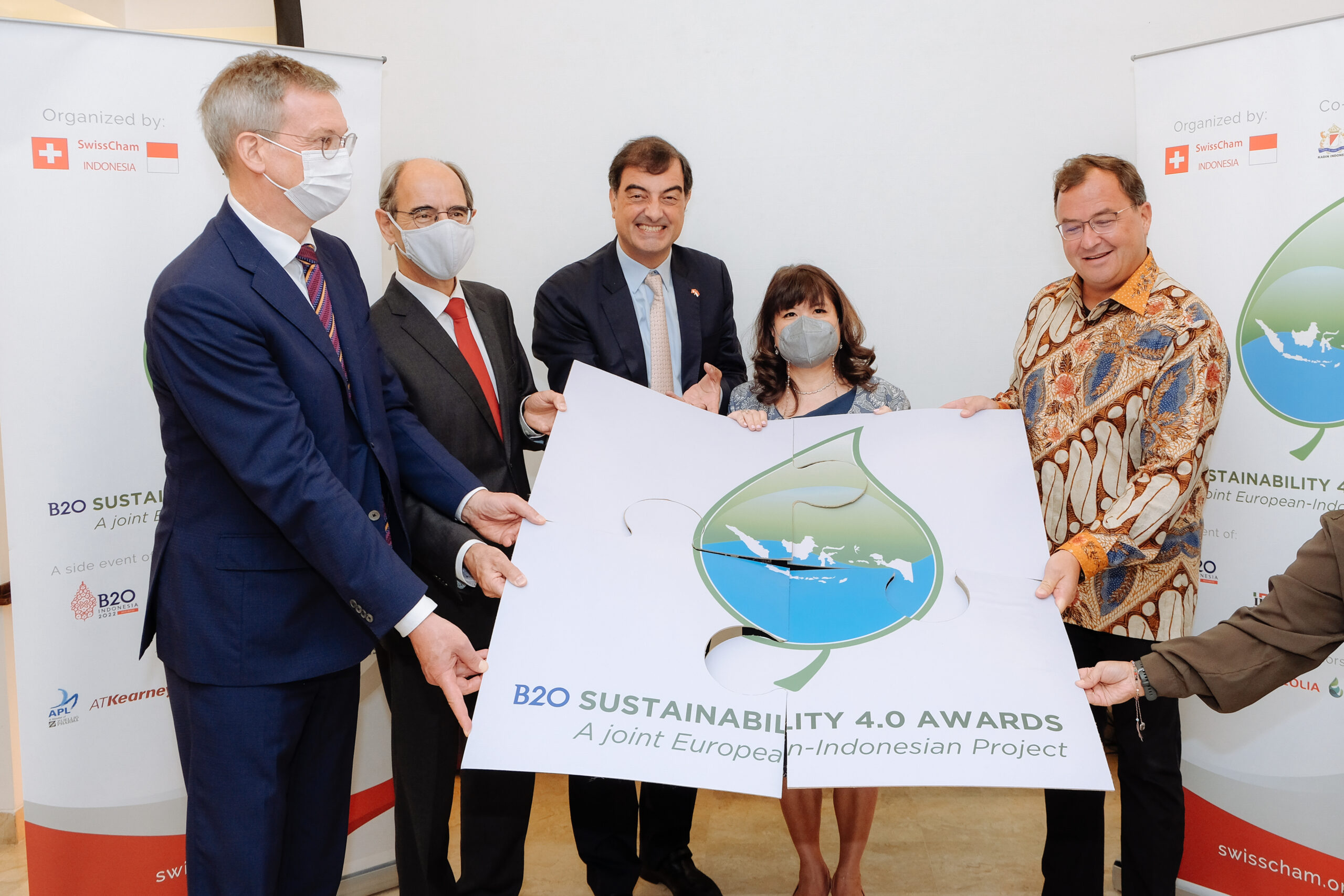
On May 17th 2022, the B20 Sustainability Award was officially launched as a joint Indonesia – European initiative at the residence of the Swiss Ambassador to Indonesia, Timor Leste and ASEAN, H. E Kurt Kunz. 

Following the launch event, application for the award is open and can be submitted via the award official website. Categories for the awards are improving access to clean water (SDG 6), reduction and or reuse of plastic (SDG 12) as well as women leaders in sustainability (SDG 5). 


Road to B20 Sustainability 4.0 Awards 

Breakfast Meeting

Here is a step closer to the final phase of the B20 Sustainability 4.0 Awards. 

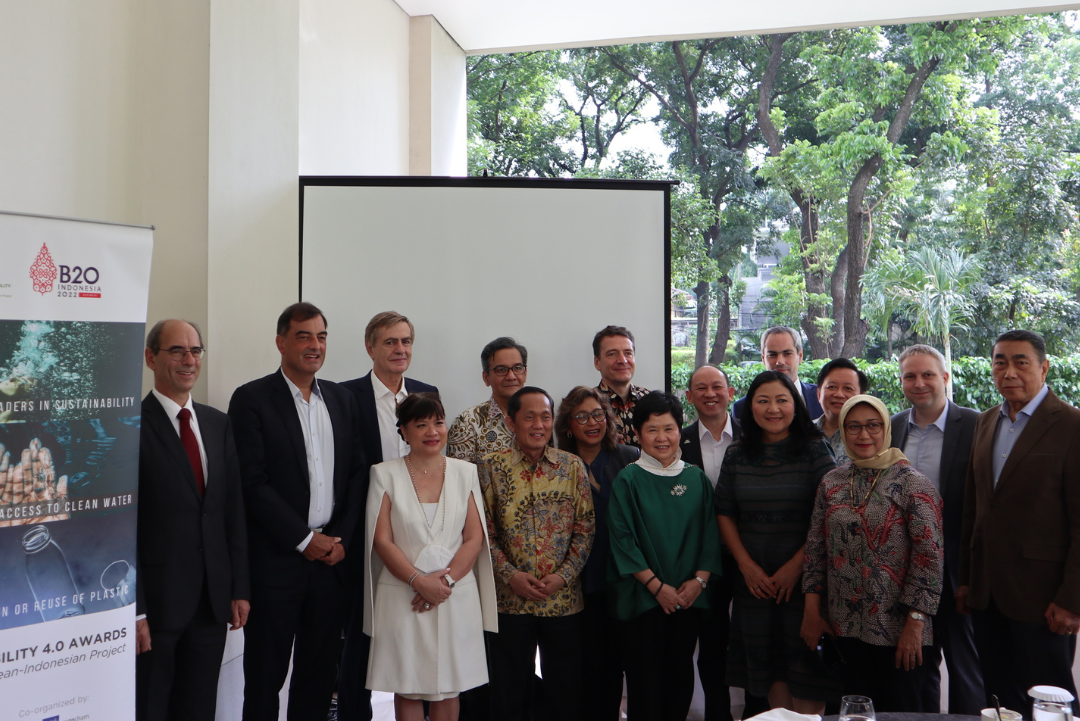
More than 700 companies, SMEs, and individuals have submitted the proposal in three categories: access to clean water, reduction or reuse of plastic waste, and women in sustainability. Prior the ceremonial event of the B20 Sustainability 4.0 Awards, the key stakeholders, including The Ambassadors, Boards of the Organizing Chambers, Partners, Sponsors, Jury Members, Boards of Committee, and the media are invited to an appreciation breakfast to share updates on the B20 Sustainability 4.0 Awards on 20 September 2022. 


The Awarding Night

awarding night

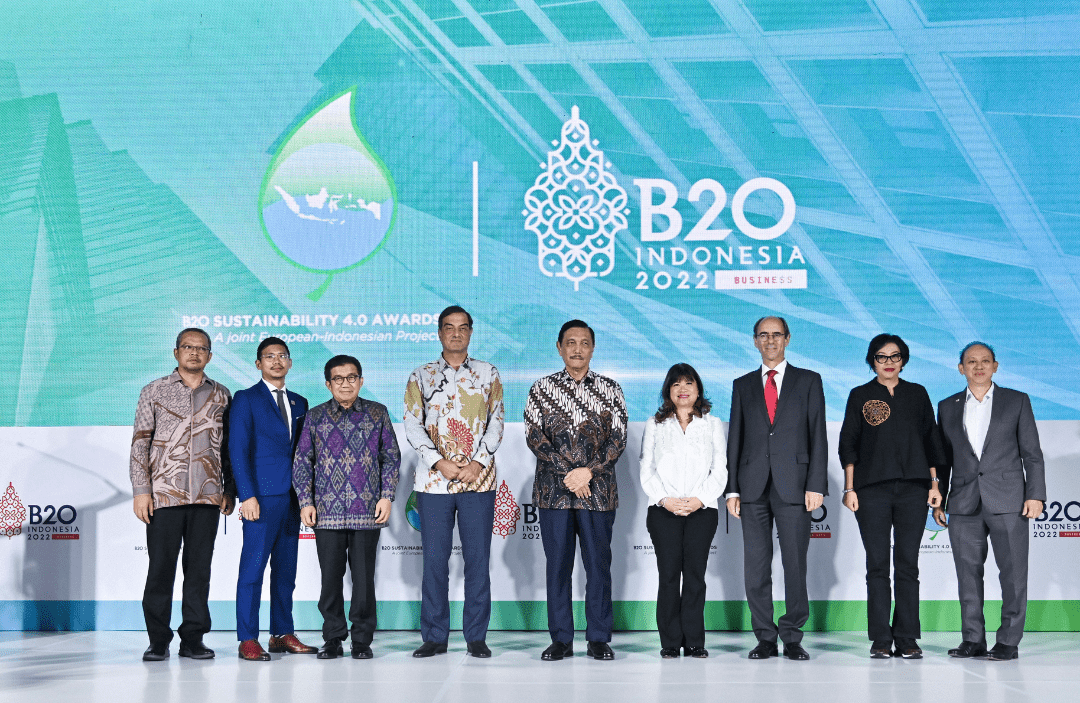
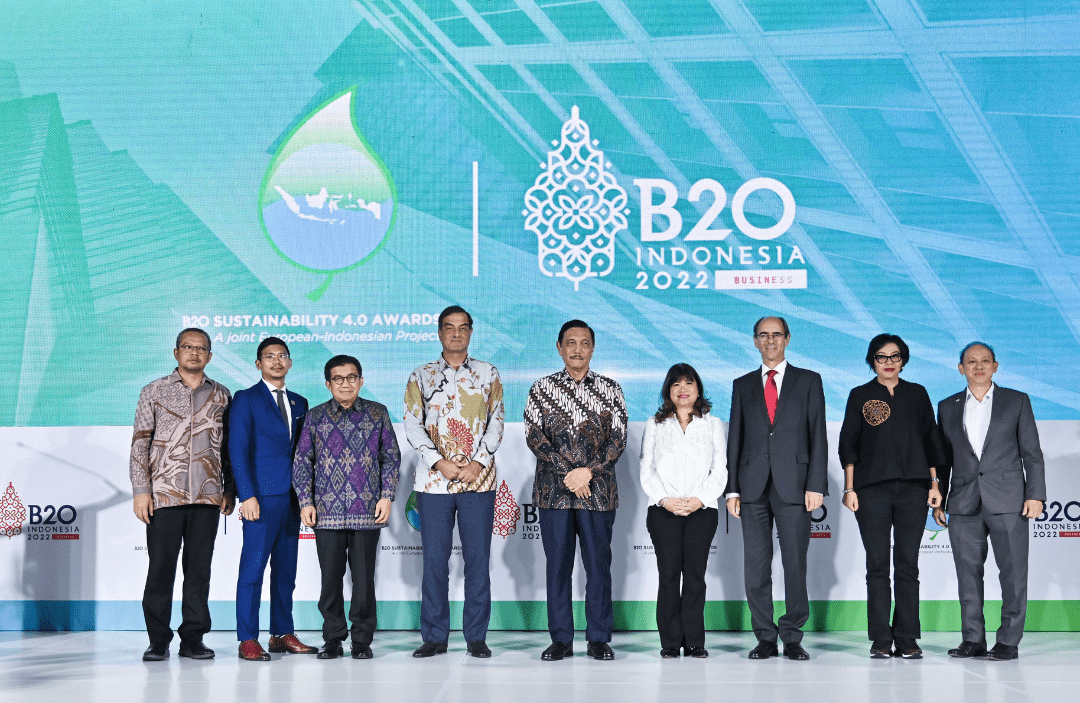
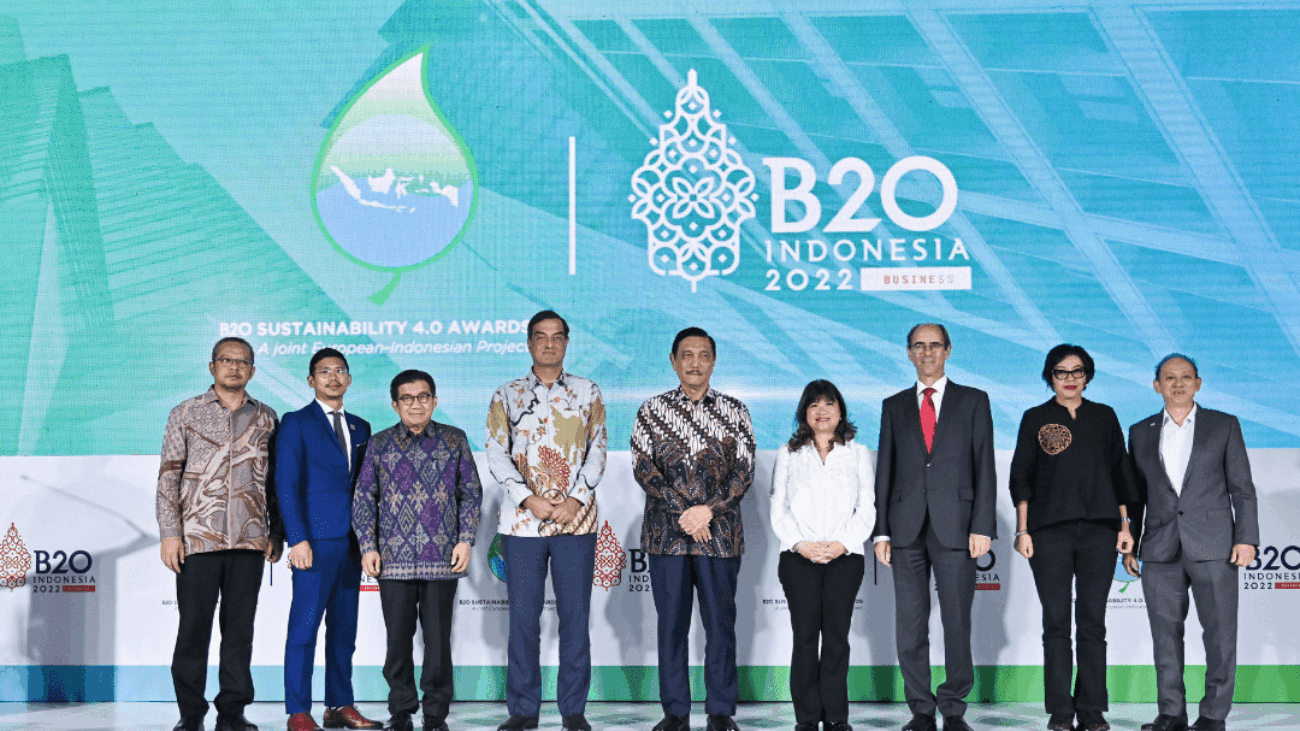
On October 18th 2022, at the Grand Hyatt Jakarta, the ceremony of B20 Sustainability 4.0 Awards was successfully held.

The Award Ceremony attended by the representatives of Indonesian government, such as the Coordinating Minister for Maritime Affairs and Investment of the Republic of Indonesia, General TNI (HOR) Luhut Binsar Pandjaitan, Director General for Solid Waste, Hazardous Waste, and Hazardous Substances Management, Ministry of Environment and Forestry, Rosa Vivien Ratnawati, SH, MSD., and more than 250 participants from various corporates, SMEs, and sustainability practitioners.


The B20 Sustainability 4.0 Awards Book

Book Launch

Here is to wrap up the small steps towards building a better world.

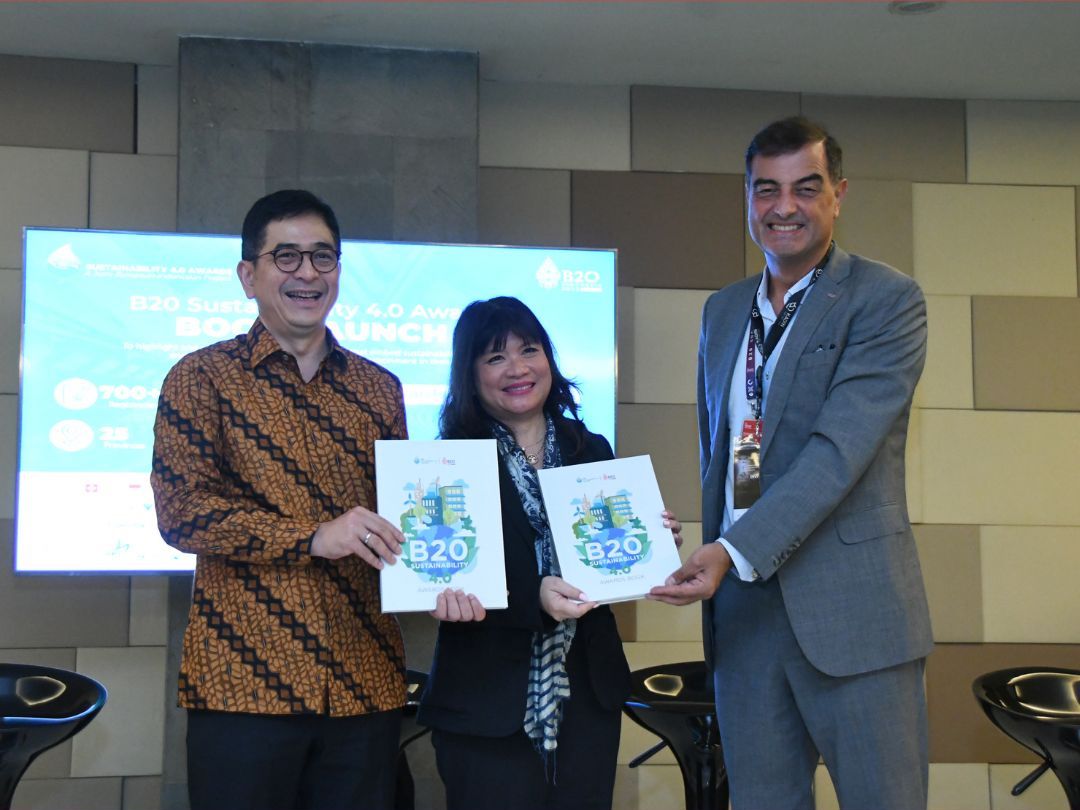
In Bali, 11 November 2022, after receiving more than 700 applicants and 200+ proposals from 34 cities in Indonesia in three main categories namely access to clean water; the reduction and reuse of plastic waste; and women take the lead in sustainability, it is time to launched the B20 Sustainability 4.0 Awards book.

The book launch coincided with the 2022 B20 Indonesia Net Zero Summit which took place at the Bali Nusa Dua Convention Center (BNDCC), Friday (11/11/2022) and was attended by the Coordinating Minister for Maritime Affairs and Investment, General TNI (HOR) Luhut Binsar Panjaitan.

Curbing Fraud in the Green Sector

Curbing Fraud in the Green Sector

This publication is authored by and reflected the views and opinion of PT Integrity Indonesia. More information about PT Integrity Indonesia is available on www.integrity-indonesia.com
 

“Sustainability” has become a hot topic discussed in various global forums, generating initiatives in various countries to switch over to sustainable business practices, such as with the establishment of France’s Duty of Vigilance, Britain’s Modern Anti-slavery Act, and Germany’s Supply Chain Due Diligence Act.

Along with organizational and individual awareness of environmental, social, and economic challenges, investments related to Environment, Social, and Governance (ESG) have also grown rapidly in recent years. More than 3,000 investors with total assets under management of $100 trillion have signed a commitment to include ESG information in their investment decisions.

The Covid-19 pandemic and other natural disasters have also made various parties aware of the importance of ESG-based organizational management. The perspective of aligning business with the sustainability of nature becomes an urgency.

The term “Green sector” itself refers to all aspects related to nature. It includes several other terms, such as “green industry” and “green economy”.


Exposure to fraud

Unfortunately, as consumer demand for products and services as well as the abundance of investment capital and financial incentives in the green sectors increase, so do the opportunities for fraud. In addition, several other factors allow fraud to thrive in the green sectors.

First, the gap between ESG standards and the company’s operational facts forces companies to adapt, in various ways. For example, a company that decides to adopt ESG standards may have to replace its largest supplier because of strong indications of non-compliance with ESG standards.

This condition creates pressure on the company. At the same time, as stated by Donald R. Cressey in his theory of fraud, pressure can encourage someone to commit fraud.

With such great pressure, instead of improving infrastructure and business models, decision-makers sometimes consider fraud as a rational solution to fulfill commitments.

Second, the rapid adoption of ESG has left the authorities with little time to develop a standardized regulatory and reporting framework.

Consequently, many companies disclose untested information to investors. In addition, the lack of standards makes it difficult to determine metrics.

For instance, the carbon emissions metric may not be an appropriate metric for measuring a company’s ESG performance. However, in order to receive incentives, businesses do voluntary reporting on carbon emissions despite the obscurity of the metric.


Greenwashing, a new face of fraud

Another condition that has the potential to cause fraud is a marketing spin to campaign that the company is sustainable, while in reality, they engage in unsustainable activities. The campaign is categorized as greenwashing.

The term that was first used by Jay Westerveld in the 1980s has re-emerged in recent years, as news of greenwashing scandals often adorns media headlines. A report by the European Commission and the National Consumer Authority stated that 42% of claims on products sold online were greenwashing.

Dieselgate 2015 is perhaps the most notorious greenwashing scandal because it involved the prominent German car manufacturer, Volkswagen. Modifications to the emission test results were disclosed by a researcher.

The DWS scandal is the latest case. This Deutsche Bank business unit was examined by BaFin (German financial authority) based on a report from its former executive, Desiree Fixler, who said that the company was greenwashing with claims that more than half of its assets were invested using ESG criteria.


Fraud detection in the green sector

Both potential and proven fraudulent actions in the green sectors can be anticipated by implementing a whistleblowing system within the organization. With this system, supervision can be carried out comprehensively from upstream to downstream, both within the parent organization and throughout the supply chain.

Whistleblowing plays a crucial role in ensuring that company claims are not misleading and comply with ESG and compliance obligations. The SEC report indicated that whistleblowers were instrumental in “rescuing” nearly $5 billion in fraud-related losses.

The whistleblowing system itself is a critical component of ESG compliance. A company cannot be deemed to have good corporate governance if it has not adhered to the principle of transparency, which includes the implementation of a whistleblowing system.

Through this system, whistleblowers can safely raise any concerns within the company. By bolstering the whistleblowing system, companies are concretely and systematically supporting a sustainable climate, environment, and protection of human rights.


This publication is authored by and reflected the views and opinion of PT Integrity Indonesia. More information about PT Integrity Indonesia is available on www.integrity-indonesia.com

Article-Thumbnail-1

Social Engineering Threats on Social Media

Social Engineering Threats on Social Media

Social Media

This publication is authored by and reflected the views and opinion of PT Integrity Indonesia. More information about PT Integrity Indonesia is available on www.integrity-indonesia.com
 

In today’s day and age, it would seem that nobody would raise their hand to the question “who doesn’t have a social media account?” With social media becoming a vital element in today’s lifestyle, at the same time, it opens a big gap for irresponsible people to commit cybercrimes—social engineering being one of them.

According to wearesocial.com, in October 2021, the number of active social media users worldwide reached 4.55 billion people. This means that more than half of the world’s population uses social media as a way of interaction.

Major frames in social media timelines are profile traffic, user activity, hobbies, interests, phone numbers, birthdays, and other data that might be more personal. Whether we realize it or not, all of this personal information constitutes a constellation of data that can be accessed and used by various parties.


Social engineering, taking advantage of human friendliness

With the advancement of technology—and more specifically, social media—comes the development of new modes of cybercrime, such as social engineering. From this source, it is understood that social engineering is a manipulation technique that utilizes human error to gain access to personal information or valuable data.

In contrast to digital data theft by means of exploiting the weaknesses of digital security systems, such as the use of malware or viruses, social engineering takes advantage of the weaknesses of digital system users. Most social engineering attacks rely on actual communication between the attackers and the victims.

Perpetrators usually motivate their victims to do what perpetrators want and eventually get deceived. Contrary to how it may seem, social engineering is very structured and systematic.

One case that is currently rife on social media is fraud in the name of banks. The scam starts with a bank advertisement on social media offering customer-level upgrades.

Tempted by the privileges of the offered upgrades, many people clicked on the ad and were directed to pages where they had to perform a few actions. All elements and aspects in the modus operandi were prepared to look as real and original as possible, including the address of the intended bank. Many were deceived and scammed out of hundreds of millions of their money.

Extracted from this source, social engineering techniques that are often applied in social media include the following:

  1. Gather victim information.

Perpetrators patiently and consistently collect pieces of information on their victims, from their hobbies, contacts, and community, to their ideology.

  1. Enter into the victim’s circle(s).

After they feel they have enough information about the victim, the perpetrator begins to establish a relationship and interact with the victim to build their trust.

  1. Retrieve data and exploit victims.

After the trust is formed, the perpetrator will lead the victim to take various actions that benefit the perpetrator.

  1. Disconnect.

After getting what they want, the perpetrator will immediately cut off contact and remove any information that can be traced back to them.

Keep in mind that the above process can take months, usually unfolding through a series of chats on social media. The friendliness and openness of the victim can also determine whether or not this process goes smoothly.


How to recognize and avoid social engineering on social media

Social engineering can occur through various methods and activities. It also commonly occurs when people make transactions at ATMs.

On social media, in particular, awareness is required to limit the publication of personal information. Our social media profiles are allowed to be viewed and accessed by many people with various interests. Restricting access to personal data means minimizing the risk of others using our data.

More specifically, knowledge is needed to recognize the signs of social engineering. Extracted from Norton Security, a digital security service provider, there are several ways to identify social engineering.

  1. Be on the lookout for unusual messages, even if they are in the name of a relative or colleague.
  2. Avoid clicking on links with gifts or messages that promise too much.
  3. Beware of messages from institutions that threaten to impose sanctions. Out of fear, victims usually subconsciously follow perpetrators’ instructions.

In addition to recognizing the modus operandi of social engineering, an equally important step is to increase the security of social media accounts. Changing passwords regularly and using a two-way verification security system are simple steps that can be taken toward data safety.


This publication is authored by and reflected the views and opinion of PT Integrity Indonesia. More information about PT Integrity Indonesia is available on www.integrity-indonesia.com