
Employee Monitoring and Post-Hire Screening: Anticipating and preventing unethical behavior in the workplace


This publication is authored by and reflected the views and opinion of PT Integrity Indonesia. More information about PT Integrity Indonesia is available on www.integrity-indonesia.com

 

Immoral behavior in the workforce can have dire consequences, for the individuals involved and the organization as a whole, like one case of sexual harassment allegation against a manager in a cosmetics company that recently went viral in the Jakarta Metropolitan Area.

When recruiting employees, companies often conduct pre-employment background screening to ensure safe and suitable hiring. But can this really guarantee constant and consistent accountability from employees? While pre-employment background screening can help companies make informed hiring decisions, it is important to remember that employees are human—their behavior and performance can, and most likely will, change over time. To keep up with these changes and make sure they are going in the right direction, employee monitoring and post-hire screening are required.

Employee monitoring refers to the practice of monitoring employees’ behavior, actions, and communications on an ongoing basis. This can include monitoring emails, phone calls, and device usage. While some may view this practice as invasive or intrusive, it can be a valuable tool in preventing legal liability and addressing security concerns.

Post-hire screening, on the other hand, is the process of conducting background checks on employees after they have been hired—most often performed when an employee is due for a promotion. This can include criminal history checks, credit checks, education verification if an employee claims to have gained a higher level of education during their tenure, and even social media checks.

 Objectives

Employee monitoring and background screening of existing employees are important practices for a number of reasons.

  • Identifying potential ethical issues before they escalate. Suppose an employee is communicating with a supplier in a way that suggests a conflict of interest. By implementing these practices, this behavior can be identified and addressed before it results in any negative consequences. Similarly, if an employee is engaging in discriminatory behavior or harassment, the behavior can be identified and addressed before it causes significant harm to others.
  • Protecting confidential information. The practices can aid in safeguarding confidential company information from unauthorized individuals. In fact, most of a company’s key access is held by employees who have worked there for many years. As a result, a core employee with extensive experience who occupies vital work posts and has access to company secrets in finance, IT, purchasing, or personnel, has the potential and opportunity to cause enormous losses to the company.
  • Improving productivity.
  • Identifying red flags. Anticipating and recognizing warning signs in existing employees’ histories can help organizations discover potential risks to the company. This can include criminal history, previous incidents of workplace violence, or issues related to substance abuse or mental health. By identifying these risks early on, organizations can take steps to mitigate them and prevent potential harm to the company, its employees, and its customers.

Methodology

Methods of conducting post-hire screening are not vastly different from those used in pre-employment background screening. The examination includes media, criminal, credit score, and residential address checks.

An aspect of monitoring that is surprisingly no less important is employee social media checks. Andrew Selepak, a professor of social media at the University of Florida, believes that “social listening” to employees’ social media activities is an effective way to conduct continuous employee monitoring. In today’s digital world, a person’s digital footprint is vital in determining the overall picture of one’s lifestyle.

That being said, it is essential to note that employee monitoring and post-hire screening should be conducted in a transparent and ethical manner. Employees should be informed of the practices and the reasons behind them to avoid uneasiness and discomfort in the workplace. Furthermore, organizations must ensure that the checks comply with the relevant laws and regulations, including data privacy laws, and signed consent from employees is vital.

People change. Indeed, human beings change—even the most virtuous employees. This is why preventive action by implementing continuous employee monitoring is the right step for companies to sustain an ideal work environment.

To implement this system, organizations must invest time and money, but in the long run, this effort can prevent substantial losses due to fraud.


This publication is authored by and reflected the views and opinion of PT Integrity Indonesia. More information about PT Integrity Indonesia is available on www.integrity-indonesia.com
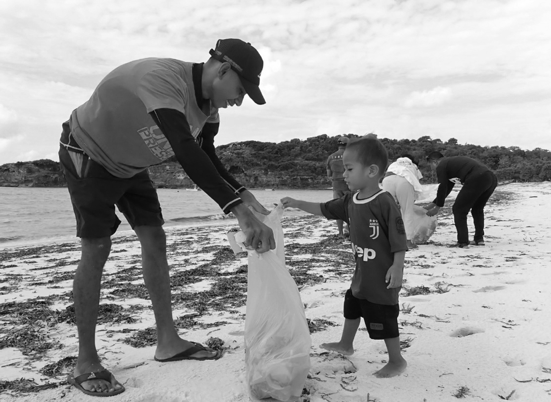
image-20230320105321-1

The First Trash Raft Race, Made in Nias

INVOLVE YOUR COMPANY:

and become a sponsor of the first TRASH RAFT RACE to raise public awareness of plastic reduction, reuse, and recycling. And be part of «Made in Nias», a new cultural Innovation Center in Nias for sustainability, participation, exchange, innovation, and environmental education.

image-20230320105321-1     image-20230320105321-2

Visualize the problem and enable participation!

How can a remote island of 650,000 people, which according to the NPAP (National Plastic Action Plan) is too small/remote to economically transport plastic waste to collection points, meet Indonesia’s goal of reducing its plastic waste by 70% by 2025?

Only when the inhabitants start to question their own behavior and their impact on the environment understand, it will be possible to find new solution. That this happens, it’s necessary to raise the awareness for sustainable and economic coexistence on Nias. In order to initiate a change, the participation and involvement of the general public is needed. The best way to do this is to have fun together.


First Trash Raft Race for public awareness of sustainability

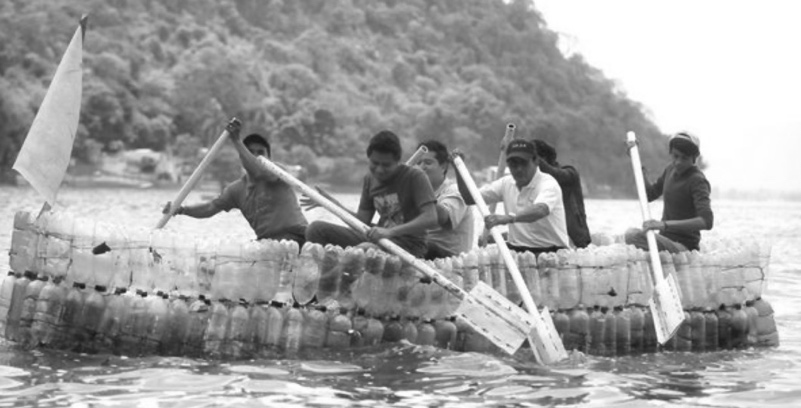
At the International Plastic Bag Free Day on July 3, 2023, we would like to launch the first Trash Raft Race in Nias. Rafts, made of collected flotsam, plastic bottles and other trash, will race against each other. Fun, sportsmanship and team spirit offer the opportunity to bring the topic of sustainability and environmental education closer to the general public and help to raise public awareness about protecting nature from further pollution of the oceans by plastic. The key message is that dealing with problems can also be fun.

The Trash Raft Race is one of several events the new Innovation Center «Made in Nias» organize this summer. For two weeks we would like to bring people together who actively believe in the power of community to have a positive impact on society and, indirectly, on the environment on Nias. «Made in Nias» promotes initiatives and the entrepreneurial spirit of young people in Nias by promoting social participation and co-determination through intercultural project work as well as educational projects. The Innovation Center creates incentives for a young, socio-politically active, and ecological movement on Nias and can become the birthplace for new projects, jobs, business ideas, local start-ups and economic growth and development.

«Made in Nias» provides you with the perfect opportunity to interact with committed people. It allows access to new resources, projects, and ideas.


Let’s reduce plastic through reliving traditional handicraft techniques

How can new approaches to reduce plastic be developed? We believe the unique culture of Nias should serve as a starting point. Because solutions and the change required can only be sustainable if it is embedded in the given culture. In atelier and by workshops, knowledge of local traditional, resource-saving manufacturing processes for everyday items will be rediscovered, communicated, and taught. Inputs on project development, design thinking, will encourage the participants to experiment, tinker and develop new products. For this purpose, we collaborate with Kuverum, the Swiss education program for cultural mediation, which supports us with their experience as a project incubator. As well as with the Museum Pusaka Nias, the place with the most knowledge about the culture of Nias. In summary, «Made in Nias» simultaneously revives the unique island culture that is being lost over the last decade, and seeks answers to environmental problems in it.


Become a partner of Made in Nias

In our Vison anyone who uses a desk at «Made in Nias», attends a workshop, works in the studio, drinks a coffee, or supports us becomes part of this interdisciplinary community of committed pioneers. This makes «Made in Nias» the local center for sustainability issues. Help us to invite the residents of Nias this summer for two weeks to help shaping the future of the innovation center. This allows testing the concept with committed people and thereby gathering experience, learning from mistakes, and evaluating the project. But also, it will enable us to discuss the needs of the innovation center and to define focus points for further training. This phase will enable initial meetings and a lively exchange with potential pioneers. It should be the beginning of a future cooperation and collaboration with partners. The conclusions from this pilot phase should, last but not least, provide information about the question of financing and ensure a concept for permanent continuation.

Changing habits is hard because change triggers fear and encounters resistance. But innovation comes about when people with energy and ideas compete against it. Help us to lead Nias towards a sustainable, environmentally sound future.


Made in Nias contact:

  • Gaby Ruppanner / Coordinator & Initiator of Made in Nias / gabyruppanner@gmail.com
  • Faozisökhi La’ia / Pusaka Nias Museum / www.museum-nias.org/en / ifaozisokhi@gmail.com
  • Yafaowoloo Gea / Organisa: Organizer of the Trash Raft Race and Founder of Yayasan Terang Nias Ehowu / www.terangnias.or.id /  yayasan.tne@gmail.com
  • Franziska Dürr / Leadership Kuverum / www.kuverum.ch / info@kuverum.ch


image-41

ISO 27001:2013 Certification – Integrity Indonesia’s commitment to information security management

ISO 27001:2013 Certification - PT Integrity Indonesia


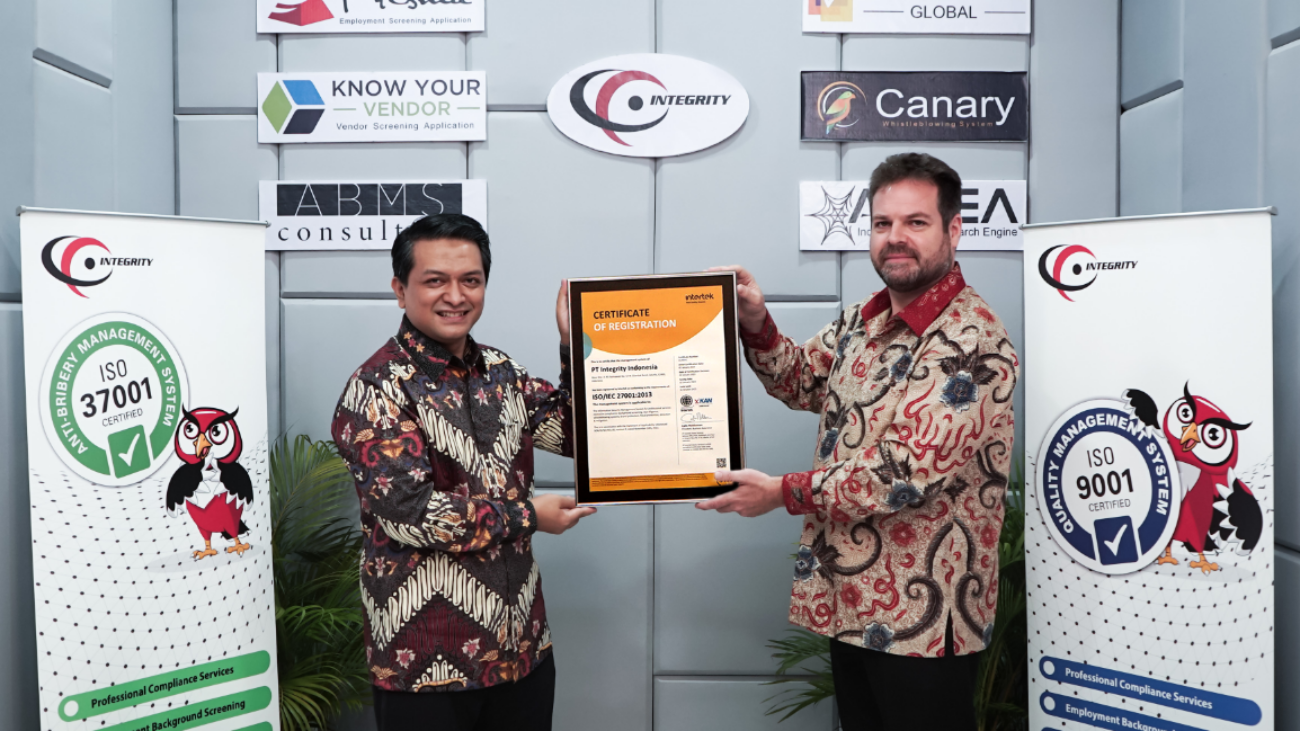
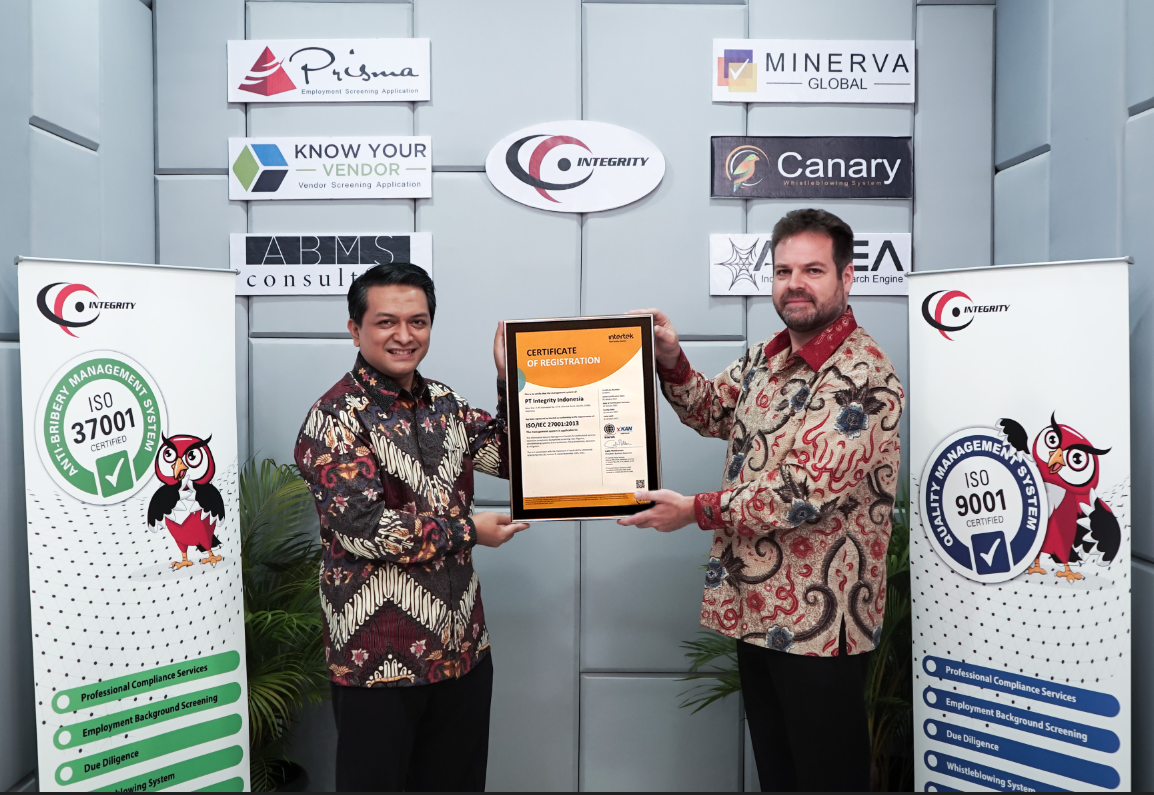
After an extensive audit by an independent and reputable certification company, PT Integrity Indonesia was awarded the ISO 27001:2013 accreditation. The certificate was officially handed out at PT Integrity Indonesia’s offices, on Wednesday 18 January 2023.


This accreditation demonstrates PT Integrity Indonesia’s dedication to data and information security management. The ISO 27001:2013 certification means that Information Security Standards have been applied in the provision of professional services related to compliance, employment background screening, due diligence, whistleblowing systems, brand protection, fraud prevention, as well as detection and mitigation.


“The implementation of ISO 27001:2013 is a form of PT Integrity Indonesia’s commitment to managing company information security risks, including protecting the confidentiality of data entrusted by PT Integrity Indonesia’s clients. This framework is critical for safeguarding data from the increasing hazards of security breaches in the digital world,” said PT Integrity Indonesia’s Managing Director, Edouard Helfand, in his remarks.


PT Integrity Indonesia has developed a number of compliance applications such as Canary Whistleblowing System and Prisma Employment Screening applications and as such abides by regulations issued by the Ministry of Communication and Informatics Regulation, laws on Electronic Systems and Transactions as well as the newly Data Protection Law issued on 20 September 2022.


Before this latest accreditation, PT Integrity Indonesia had previously enhanced its management by obtaining the ISO 9001:2015 Quality Management System and ISO 37001:2016 Anti-Bribery Management System certifications, providing its stakeholders with additional evidence of the trustworthiness and commitments of its team members.


Copy-of-BOSF_Logo

GET CONNECTED WITH BORNEO ORANGUTAN SURVIVAL (BOS)

BOS Logo

Borneo Orangutan Survival Foundation, or as it is more commonly known, the BOS Foundation, dream of a world where all wild, rehabilitated, and continuous care-dependent Bornean orangutans are free to live in sustainably managed forests or sanctuaries, providing benefits to both people and nature. To turn this dream a reality, BOS Foundation use multi-stakeholder partnerships to rescue, rehabilitate, and release Bornean orangutans to the forests of Borneo, while conserving reintroduced and wild orangutan populations and their forest habitats, and providing long-term sanctuary care to orangutans that cannot be reintroduced to the wild.

BOS with Orangutans

BOS Foundation believes that they are not alone on the frontlines of orangutan conservation. Even in the most remote working areas, these habitats are not only important to local communities but to our shared global climate, meaning that orangutan conservation is not just an environmental issue confined to Indonesia, but a global and human one. To achieve sustainable and long-term conservation, BOS Foundation engages with local communities, government bodies, educational institutions, and audiences across the world through endeavors in education, capacity building, and joint planning. This is realized not only through the Indonesian operations, but by close collaborations around the globe with Partner organizations – amongst these BOS Schweiz.

BOS with Orangutans
 

Borneo Orangutan Survival Switzerland (BOS Schweiz) is an independent non-profit organization registered in Switzerland and headquartered in Zürich. For 18 years, BOS Schweiz has been supporting BOS Foundation’s projects in Indonesia and over time grew into BOS Foundation’s most significant donor. Through fundraising and campaigning in Switzerland, BOS Schweiz financially supports the rescue, rehabilitation and release of orangutans as well as forest conservation efforts, but also co-manages projects with BOS Foundation and contributes expertise. In Switzerland, BOS Schweiz is growing its educational programme and works closely with the public as well as private sector.

Would you like to do good for the orangutans, the global climate and even for your image? Do you envision an engagement that creates a meaningful connection to your business activities in Indonesia? Then working with BOS is the right choice.

Orangutan

How you can support BOS 

If you are headquartered in Switzerland and would like to support BOS Projects in Indonesia, please get in contact with BOS Schweiz. BOS would be glad to meet you in person, to present our work to you and – based on your needs and wishes – to design the perfect sponsoring idea together. Create a story around your engagement with BOS and offer you a large database of materials which you can use freely for your communication and PR efforts. BOS do report in German or English and of course issue the invoices and tax-relevant donation receipts you need. BOS’ sponsoring partnerships with Swiss companies range from smaller collaborative events happening all over Switzerland with or without our presence to larger sponsoring initiatives. Companies like Zürich Versicherungs-Gesellschaft AG, Lush Schweiz or Filabé of Switzerland Ltd support BOS’ educational program, donate to the BOS rescue centers (e.g. by adopting orangutans) or help BOS conserve large forest areas (e.g. by donating seedlings for every paper bag they sell or by gifting tree certificates to their business partners and customers). With these and many other Swiss companies BOS Foundation has established meaningful business relationships that are as long-lasting and sustainable as the projects BOS do support in Indonesia.


BOS Schweiz contact:

Sophia Benz (CEO, Sophia.Benz@bos-schweiz.ch)

Nico Bärtsch (Sponsoring, Nico.Baertsch@bos-schweiz.ch)

Website: www.bos-schweiz.ch

Instagram: @bos_schweiz

Facebook: @bosschweiz

LinkedIn: https://www.linkedin.com/company/bos-schweiz/

Youtube: BOS Schweiz


For direct collaborations of your Indonesian offices with BOS Foundation in Indonesia, please contact BOS’ office in Bogor. You can arrange educational workshops for your employees in Indonesia or visits to Samboja Lodge with guided tours with BOS. Joint education campaigns or events where BOS will put together a custom package for you (e.g. videos, infographics, brochures, landing pages, etc.) are a great way to support BOS’ projects as well as reforestation packages or supporting 1+ orangutans through the rehabilitation process. All BOS projects can be sponsored directly or BOS can provide you the materials if you want to fundraise for a project from your Indonesian employees or customers. Please have a look at examples of a few of BOS’ past collaborations with Indonesian companies: https://www.orangutan.or.id/get-your-business-involved

BOS Foundation contact:

Andrea Knox (International Communications and Research Advisor, a.knox@orangutan.or.id)

Shintya Anjani (Head of Fundraising, shintya@orangutan.or.id)

Website: www.orangutan.or.id

Facebook: @BOSFoundation

Main Instagram: @bosfoundation

Shop Instagram: @orangutanshop

Twitter: @bornean_OU

Tiktok: bos_foundation


0i2Eu49fWgi2yPtdJIHQjQWdr361T-Zg0oliLXQkwuryOqhrSXwkjKNIUVirg1biMgKu8fsuxDarA0l-aBJWC-zFyRdZGoBVOpM6fvsbPoinxcB1fG7XurZU03zXYYF7PR-FWW8Ywz9ZM_TUUgry9eq-4jj91AhyM8f4dBjy0XCFE2kg7iyZvDI_aQ

GET TO KNOW SWISS STATE SECRETARIAT FOR ECONOMIC AFFAIRS (SECO)

SECO is the federal government`s centre of excellence for all core issues relating to economic and labour market policy. SECO works to contribute to sustained economic growth, high employment and fair working conditions. 

Q : What is SECO and why is SECO operating in Indonesia?

A : SECO stands for the Swiss State Secretariat for Economic Affairs. SECO provides grant funding for technical assistance and capacity building activities to its partner countries, including Indonesia (and Vietnam in Southeast Asia). Switzerland and Indonesia have been development partners since the 1970s when Switzerland launched its first projects and supported the establishment of the Politeknik Mekanik Swiss (POLMAN), as well as the National Hotel Institute in Bandung. Today, Switzerland continues its successful partnership with Indonesia through its Economic Cooperation and Development Program 2021-2024, which aims to spur inclusive economic growth and to reduce poverty.

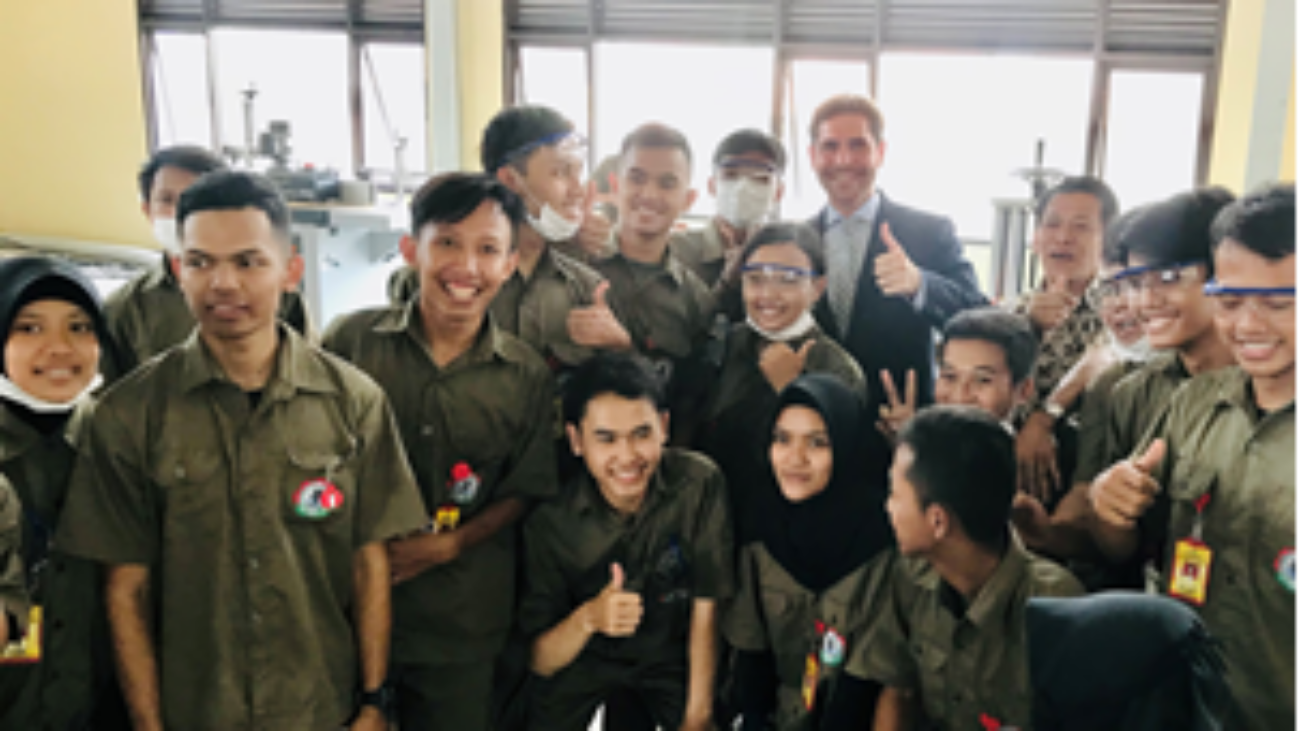
Students at the Furniture and Wood Processing Polytechnic in Kendal (Skills for Competitiveness Project, S4C).


Q: What are SECO programs that are ongoing in Indonesia and what is the purpose of executing these programs in Indonesia?

A: Through its Cooperation Program with Indonesia, SECO funds more than 30 projects and works with 15 implementing partners and 10 Ministries, and covers topics such as dual vocational education and training (where we collaborate with SwissCham, see below), public financial management, sustainable value chains, in particular of export commodities (e.g. palm oil), sustainable tourism, access to finance and markets for SMEs, and sustainable urban development. These are all sectors in which Switzerland has a lot of expertise and where demand from Indonesia is highest. The total budget envelope amounts to 65 million Swiss francs for a four-year period. Through these 30+ projects, Switzerland’s Cooperation Program supports Indonesia in realizing its development potential.


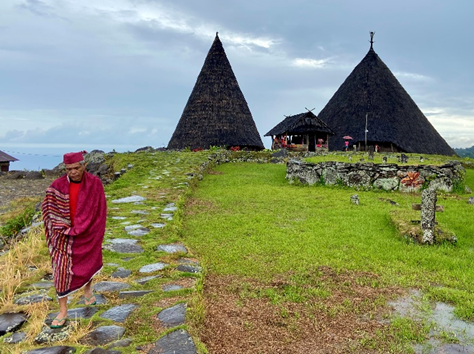
Todo village in Manggarai Regency, Flores island (Sustainable Tourism Destination Development Project, SUSTOUR).


Q: How does SECO contribute to the achievement/mainstreaming of the Indonesia – EFTA CEPA?

A: There is no direct link between Switzerland’s Cooperation Program and the Comprehensive Economic Partnership Agreement (CEPA). But through the Cooperation Program, Switzerland supports the implementation of the ‘Economic Cooperation and Capacity Building’ Annex to the CEPA with a focus on trade. It does so via several projects. For example, the Swiss Import Promotion Program (SIPPO) strengthens the export promotion capacities of Business Support Organizations in order to help SMEs access new markets. Moreover, SECO will launch a new program in early 2023 which will facilitate public-private collaboration and partnerships to promote sustainable commodity production practices and development of sustainable and inclusive value chains (palm oil, cocoa, coffee, etc.) to improve economic opportunities for farmers.

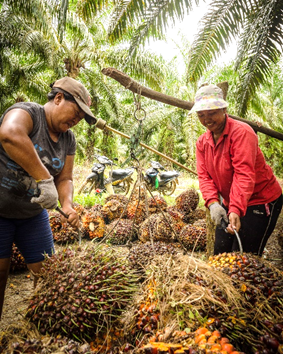
Smallholder oil palm farmers in Jambi (Green Commodities Program, GCP).


Q: What is SIPPO and how can it better assist Indonesian business entering the Swiss market? 

A: Through SIPPO, Switzerland supports Indonesia in boosting its export performance. SIPPO works with BSOs to improve their export promotion services and market access knowledge. This in turn allows BSOs to provide more targeted and tailor-made services to companies (e.g. trade show participation, linking suppliers with buyers, etc.). For instance, in 2021, SIPPO together with another SECO-funded project called SMART-Fish, partnered with the Ministry of Marine Affairs and Fisheries to develop the first Indonesian Shrimp brand to create more visibility for Indonesia’s shrimp industry. This is only one example that shows how SIPPO helps Indonesian companies reach new markets. 


Q: What are the examples of SECO-private sector collaboration, and why is this effective?

A: The private sector plays a vital role in development cooperation. Across all sectors, SECO works in partnership with a range of private sector partners – multinational corporations, banks, local businesses, and impact investors. A success story in this context is the collaboration between the Swiss-funded Skills for Competitiveness (S4C) Project and SwissCham. In 2021, S4C signed a Letter of Intent with five SwissCham member companies to boost vocational education in Indonesia and to improve the employability of fresh graduates by ensuring that the skills of students are in line with industry needs. Based on Switzerland’s successful dual vocational education and training system, creating a stronger partnership between the schools and the industry is one of the main objectives of the S4C Project. The experience of working with SwissCham has been very positive. Bühler, Endress+Hauser, Indesso, Koltiva, and SICPA have all accepted interns from S4C partner schools! We hope that many more Swiss companies will join this exciting program soon. 

Students at the Metal Industry Polytechnic in Morowali (S4C Project).


Q: Having been in Indonesia for a while, what is your impression of the country and from a SECO lens, how do you think SECO – Indonesia-based partners can mutually benefit moving forward?

A: Indonesia has a lot of potential and the future looks bright. Not only is Indonesia endowed with extraordinary natural resources but it also has a huge working age population, which will reach 70 percent by 2030. To unleash Indonesia’s full potential, it will be important to further enhance trade and investment while at the same time maximizing human capital. These are all topics that are covered by SECO’s Economic Cooperation and Development Program with Indonesia and we trust that through partnership we can support Indonesia in becoming a more sustainable and competitive economy that benefits the people of Indonesia.

Henry-Chia

SwissCham Indonesia Chairman Message


Watch a message video from Indonesia SwissCham Chairman, Henry Chia, to all Indonesia SwissCham members.


Dear members and friends of Indonesia SwissCham,

Mr. ChairmanThe fifth SwissCham Annual General Meeting (AGM) on 31st August 2022 new board members of Indonesia SwissCham has been elected, and the chamber finances and activities have been accepted and approved.

I would like to thank Mr. Chris Bendl for his chairmanship of the SwissCham for the past two years, as well as the outgoing board members for the leadership, dedication, and professionalism which brought a tremendous success to the chamber.

While we always utilize the AGM to welcome the new board members, I am very pleased to say that most of the former board members remain creating a solid basis for the chamber’s future stability.

The activity initiated in the sectoral groups Ease of Doing Business; Fiscal, Customs, and excise; Sustainability and Innovation; Human Capital Development; all are on track.

SwissCham’s success is partly due to our excellent engagement and collaboration with the Swiss Embassy in Indonesia as well as Indonesia Embassy in Bern.

I am looking forward to meeting you all in a lovely social evening hosted by Indonesia SwissCham and we will use that occasion to build a strong relationship.

I will see you soon!


Sincerely,

Henry Chia

Chairman of the Board of Management


Fraud and COVID-19 Relief Funds

Fraud and COVID-19 Relief Funds

Fraud and COVID-19 Relief Funds

This publication is authored by and reflected the views and opinion of PT Integrity Indonesia. More information about PT Integrity Indonesia is available on www.integrity-indonesia.com
 

Fraud and COVID-19 relief funds

The lockdowns, border control and social distancing measures taken against COVID-19 epidemic have contributed to further worldwide economic and financial upheaval. Many countries have entered an economic recession, and had to establish various economic recovery plans for employees and Micro, Small and Medium Enterprises (MSME), the social components most impacted. Grants, loans, tax breaks, and other forms of assistance were provided.

In the midst of any crisis, the management of relief funds is always vulnerable to fraud. The enormous amount of assistance funds, the lack of a legal and risk management framework for managing those funds, and the easier access to the funds without an appropriate degree of protection altogether entice fraud perpetrators. 

The UK claims to have lost more than £16 billion in Covid loan schemes. The Furlough and Bounce Back Loan Schemes (BBLS) schemes have been reported to suffer the most losses.

The US admits to being ‘robbed’ of hundreds of billions of dollars from the Paycheck Protection Program (PPP) and the Economic Injury Disaster Loan (EIDL) schemes. 


Factors causing the loss of funds

In a disaster situation, such as the COVID-19 pandemic, the speed and precision at which relief funds are distributed is critical to rescuing millions of employees and companies. One of the initiatives taken by the UK and the US governments to speed the distribution of funds is by reducing the verification process or even eliminating it completely.

Unfortunately, ‘speed’ trumps caution and opens more doors for fraudsters, including experienced criminals. During the registration process through the BBLS scheme, for example, eligibility only depends on independent business certification without verification. Another concession is that the debtor does not need to perform a credit check against potential creditors.

The perpetrators take advantage of this leeway by executing their modus operandi, which are document falsification and identity theft. In one case in the US, the perpetrator falsified the financial information of two small businesses so that he was eligible for a loan under the EIDL scheme worth a total of 300.000 US dollars.

Several crime and bankruptcy agencies report that enormous amounts of relief funds are used to fund gambling, luxury purchases, renovation of private buildings, and even the funding of international criminal networks.

Aside from a lack of verification, another factor that raises the risk of fraud is a lack of oversight over the use of funds. Inadequate verification allows those who are not eligible for relief to receive it, leading the number of recipients to skyrocket.

The high volume, combined with a system that was not designed for monitoring, has led to an unavoidable misuse of funds. As is seen in one case where a doctor claimed to spend the cash to pay his employees’ salaries, in reality, the funds were used to purchase luxury goods.

A systemic flaw is closely related to weak internal controls and lack of transparency. 


Fraud investigation and mitigation

The mind-boggling and unacceptable number of losses prompted the UK and US governments to conduct thorough investigations. The investigations involved many relevant authorities to examine each recipient. The goal was to return as much of the lost funds as possible as a form of accountability to taxpayers.

Every business and individual that has received funding must prepare to undergo painstaking and time-consuming compliance checks. Those who are proven to be involved in acts of fraud may be subject to criminal and civil sanctions in accordance with the applicable laws of their country.

This step must support improvements to the functions of verification, internal control, supervision, and transparency of reports on the use of funds. After receiving input from various related institutions that conduct fraud studies, the UK and US governments are determined to make improvements to the verification steps of potential recipients of recovery funds in the next round.

In terms of internal control, strengthening can be done by implementing a whistleblowing system. This system allows individuals within the organization to report fraud red flags. As a result, fraud can be identified as early as feasible, minimizing potential loss.


This publication is authored by and reflected the views and opinion of PT Integrity Indonesia. More information about PT Integrity Indonesia is available on www.integrity-indonesia.com
 

Whistleblowing vs Leaks

This publication is authored by and reflected the views and opinion of PT Integrity Indonesia. More information about PT Integrity Indonesia is available on www.integrity-indonesia.com
 

Whistleblowing vs Leaks

The case of Julian Assange came into the spotlight once again after the British government gave permission for the extradition of the Wikileaks founder to the United States. Before being arrested and detained by British authorities, Assange hid in the Ecuadorian embassy for twelve years. With this extradition, the Australian will face a US court on 18 criminal charges and if convicted, could face up to 175 years in prison.

As one of the founders and a public persona of Wikileaks, Assange received many awards and accolades as well as lawsuits after his whistleblowing site published the secrets of various national authorities, including the USA. The leak of their confidential documents had quite a political impact on the nation.

In addition to Assange, Edward Snowden and Chelsea Manning are among other whistleblowers who have been in the media spotlight and persecuted.


Media as a whistleblowing channel

Wikileaks is a non-profit media organization that was founded in 2006 with the aim of disseminating confidential information or documents from anonymous whistleblowers. As they are a non-profit organization, instead of competing with other mainstream media, Wikileaks works with them. In the Cablegate case, for example, Wikileaks provided thousands of classified documents to the four mainstream media before they were released to the public.

In general, the importance of the media as a whistleblowing channel is determined by the magnitude of the fraud or violation and its proximity to the public interest. The more critical the fraud, the closer it is to the public interest, the greater the public pressure due to negative publicity which is expected to encourage the organization to make improvements.

In the case of Wikileaks, the violations exposed are committed by a government and a policymaker, which are directly tied to the public interest.

Likewise with a nation, from the point of view of a company, engaging the media as a whistleblowing channel is not the preferred move since unfavorable exposure has an influence on reputation, which in turn impacts employee morale, sales, and investor views.

Therefore, implementing an effective whistleblowing system within the organization as a legal means to maintain the confidentiality of information is very important.


Why whistleblowers go to the media

A person decides to report a violation that occurs within the organization with the hope for improvement by the organization. However, there are several reasons why someone may report a violation to external parties or the media, instead of to the internal organization. These reasons include the high risk of retaliation from the organization, the lack of response from internal parties, and the desire to be an anonymous reporter.

In the case of Wikileaks, the disclosed violations revealed are committed by the government. A study revealed that the effectiveness of reporting to internal government channels is limited because government entities operate in a political context.

When the organization’s internal whistleblowing system runs ineffectively, in that it does not implement a whistleblower protection policy and does not respond well enough, the media becomes the logical choice in the hope that their reports will be taken seriously due to public pressure. Many surveys reveal that the majority of whistleblowers actually report their findings internally before they go to the media.

In addition to the choice of channel, a whistleblower will also choose whether to report anonymously to minimize the risk of retaliation. This pretty much explains why Wikileaks offers a channel for anonymous reports. However, anonymity can also damage the credibility of the report because it raises questions, for example, whether the whistleblower is really a member of the organization, etc.

This is the important role of independent media such as Wikileaks, which is to minimize credibility issues while protecting the identity of sources. Independent media can freely verify and investigate reports, in any form, provided by these anonymous sources without the intervention of any party. This is also a form of response which is usually not carried out by the government but is actually expected by the whistleblower.

Wikileaks itself claims that they test the veracity of a report using traditional investigative journalism techniques combined with current modern technology-based methods. This is to ensure the truth of the information provided by the reporter before it is disseminated to other media and released to the public.


Internal whistleblowing systems as an alternative to public media

Having learned from the story, organizations try to avoid negative publicity in the media. In order to achieve this, they need to ensure that they run effective internal whistleblowing systems.

The effective systems only work in open and ethical cultures, where employees are actively encouraged to report or raise concerns about any suspicious signs of wrongdoings. Employees will feel safe in making these reports if there are certain protection policies in place and if their reports are taken seriously. By implementing an effective whistleblowing system, an organization would essentially adhere to the values of transparency and candor.

Furthermore, whistleblowing systems have gained recognition as some of the most potent early fraud detection tools, with its own ISO guidelines with the release of ISO 37002:2021 on Whistleblowing Management Systems. Hence, the earlier fraud is detected, the smaller the potential loss the organization will suffer.


This publication is authored by and reflected the views and opinion of PT Integrity Indonesia. More information about PT Integrity Indonesia is available on www.integrity-indonesia.com

SwissCham Structured Internship Support

Indonesia SwissCham offers a “Structured Internship Support” to help you find the right intern and to support you in the process of conducting beneficial structured internships.

WHAT IS IT?

Indonesia SwissCham joined forces with S4C Project to offer support services for the implementation of structured internships, derived from a dual vocational education & training system. Aim to improve the quality and organization of internships by connecting the company and selected and quality Polytechnics across Indonesia. 


BENEFITS

Why Join Us:

SwissCham Structured Internship Support will improve the quality and organization of internships and ensure that they are more effective and beneficial for you! 

For Industry:

  • Access to high quality workforce by skilling future employees 
  • Boost productivity and increase competitive advantage
  • Increase company visibility
  • Cost-saving in recruitment 
  • Potential Financial Incentives
  • Enhance in-company trainer skills
  • Mentorship opportunities for current employees

For Youth:

  • Close labor gap – trained in specific skills demanded by the market
  • Greater motivation – trained & developed in a business learning environment
  • Job competitiveness upon graduation
  • Economic Incentives
  • Enhance professionalism – discipline and work ethics


STEPS TO JOIN THE SUPPORT

  1. Request of support by company for joining the program
  2. Sign LoI as a proof of commitment from company
  3. Needs assessment to understand current internship structure within company and find any gaps
  4. Matching specific poly/study program with company’s structured internship demand
  5. In-CT (In-Company Trainer) selection
  6. In-CT Training organized by SwissCham and partners, to strengthen your competencies for preparing & organizing a structured internship
  7. Implementation of structured internship with close coordination between school and company, supported by SwissCham. 

Indonesia SwissCham is pleased to join forces with the Skills for Competitiveness (S4C) project in implementing this support! 

For more information about this support, please contact secretariat@swisscham.or.id

Join us and be part of a collective effort in improving the quality workforce for the future & to provide a life-changing experience for students!


SwissCham Newsletter: THE TROPICAL ALPINE – Q1 2022


Read our complete newsletter here


Dear SwissCham valued members,


Happy Ramadhan to our Muslim members and readers, and Happy Spring to our friends in Switzerland!


There are many wonderful traditions to mark Ramadhan in Indonesia. Hopefully, you will be able to enjoy this time with family, friends, and colleagues this year.


Even though we are still in the first quarter of 2022, we have seen many exciting highlights and activities as featured in the newsletter, and we are confident that this will continue well into the year.


In this issue, we will cover the important achievement of Switzerland being in the top 10 largest investors in Indonesia, the Young Professional Agreement coming into force, notable chamber activities, and other valuable updates from our members.


We hope you find the newsletter informative – happy reading!


Sincerely,


Chris Bendl

Chairman of Indonesia SwissCham